
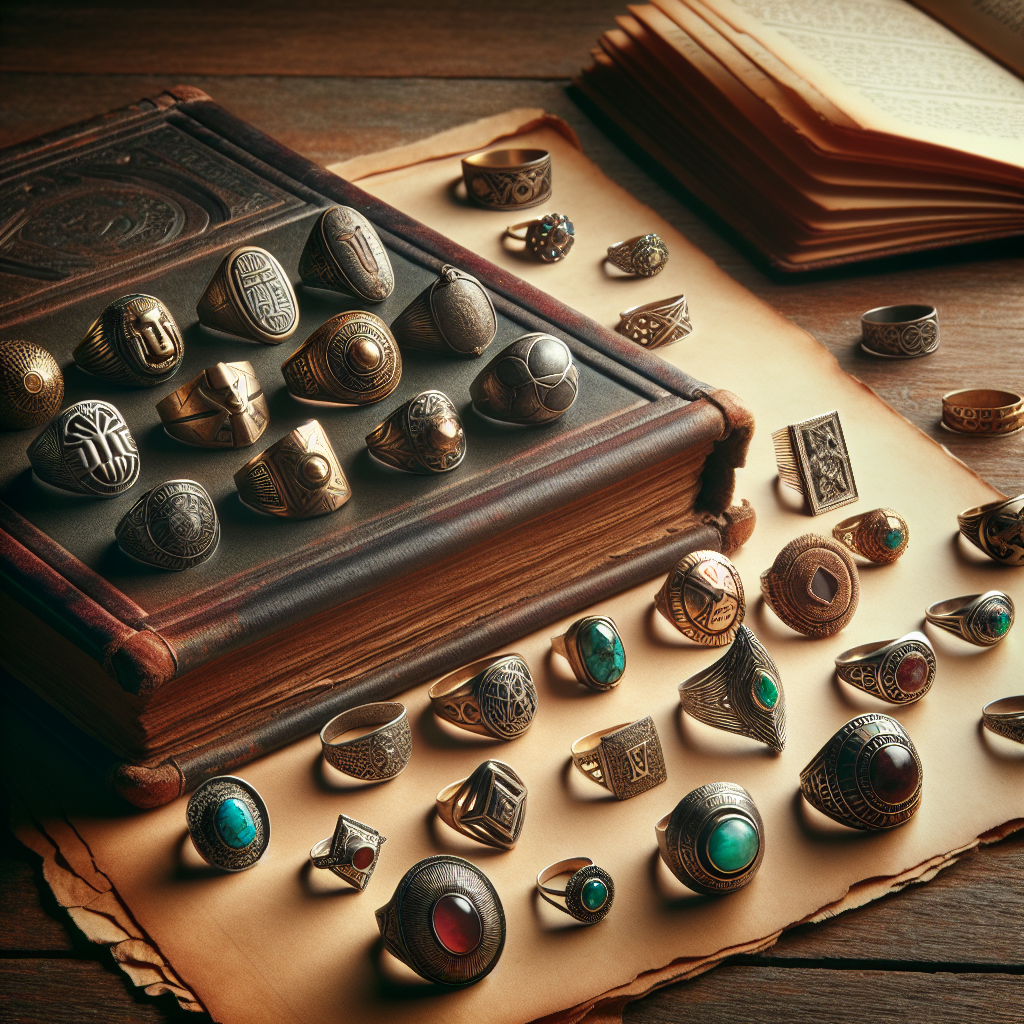
Rings have captivated humanity for centuries, transcending time and cultural boundaries. From ancient civilizations to modern-day symbols of love and commitment, these circular adornments hold deep-rooted significance that goes beyond mere aesthetics. In this article, we explore the multifaceted meanings of rings, their historical contexts, and their roles in various cultures around the world.
The Historical Context
Ancient Civilizations
The allure of rings can be traced back to ancient civilizations. In Egypt, for instance, rings made of gold were not only a display of wealth but also a representation of the eternal. The circular shape, with no beginning or end, symbolizes eternity and timelessness. Egyptian pharaohs were often buried with rings, believing they would accompany them in the afterlife.
Similarly, the Romans used rings to signify status and loyalty. Engraved with family crests, signet rings served as personal stamps for sealing documents, a practice highlighting their importance in both social and legal contexts. The symbolism of ownership and identity provided a sense of belonging in a rapidly evolving society.
The Middle Ages and Beyond
As societies evolved, so did the significance of rings. During the Middle Ages, the idea of courtly love became popular, and rings were exchanged as tokens of affection. Often adorned with gemstones, these rings represented fidelity and devotion. The popularization of engagement rings can be traced back to this period, with the first recorded instance of an engagement ring offered in 1477 by Archduke Maximilian of Austria to Mary of Burgundy.
Rings in Different Cultures
Western Cultures
In contemporary Western culture, rings are primarily associated with significant life events. Wedding rings, in particular, hold a powerful symbolism of love and commitment. The tradition of exchanging rings during a wedding ceremony signifies the bond between partners, with the circular design representing unity.
Engagement rings, often featuring diamonds, have become a cultural norm, marking the promise of marriage. This modern practice, while rooted in history, is heavily influenced by marketing campaigns that emphasize the significance of the diamond, further embedding its importance in societal norms.
Eastern Traditions
In many Eastern cultures, rings carry distinct meanings. In India, rings are often worn as part of the wedding ceremony, celebrated with vibrant rituals. The Mangalsutra—a sacred necklace that may include rings—represents the bond between husband and wife, reflecting religious and cultural beliefs surrounding marriage.
In Japan, wedding rings are often exchanged during ceremonies, but some couples choose to wear family heirloom rings to honor tradition. The concept of "family" is significant, as these rings symbolize continuity and connection across generations.
Indigenous Cultures
Indigenous cultures worldwide also incorporate rings into their practices. For Native American tribes, rings made from natural materials often signify tribal affiliation or personal achievements. These rings are not only decorative but also serve as reminders of one’s identity and cultural heritage.
Symbolism and Meaning
Love and Commitment
At the core of most cultural significances surrounding rings is the theme of love and commitment. Whether they are engagement rings, wedding bands, or familial heirlooms, rings symbolize promises made and connections forged. Their enduring presence in ceremonies and traditions reflects humanity’s intrinsic desire for connection.
Power and Status
Rings also embody concepts of power and status. Historically, royalty and elite classes wore rings as symbols of authority and wealth. The wearing of elaborate, gem-encrusted rings conveyed social standing, with each piece telling a story of its owner’s lineage and legacy.
Spiritual and Mystical Beliefs
Throughout history, rings have been associated with spiritual beliefs. Many cultures believe that rings can offer protection or bring good luck. In some traditions, specific stones set within rings are thought to contain magical properties, guiding the wearer towards desired outcomes.
Conclusion
The allure of rings is timeless, echoing through the ages and across cultures. From symbols of love and commitment to representations of status and protection, these circular ornaments encompass a rich tapestry of meanings. Their ability to evoke profound emotions and convey cultural significance makes rings not merely accessories but powerful expressions of identity and human connection. As we continue to celebrate events and milestones with rings, their enduring charm reminds us of the stories they carry and the bonds they symbolize.
