
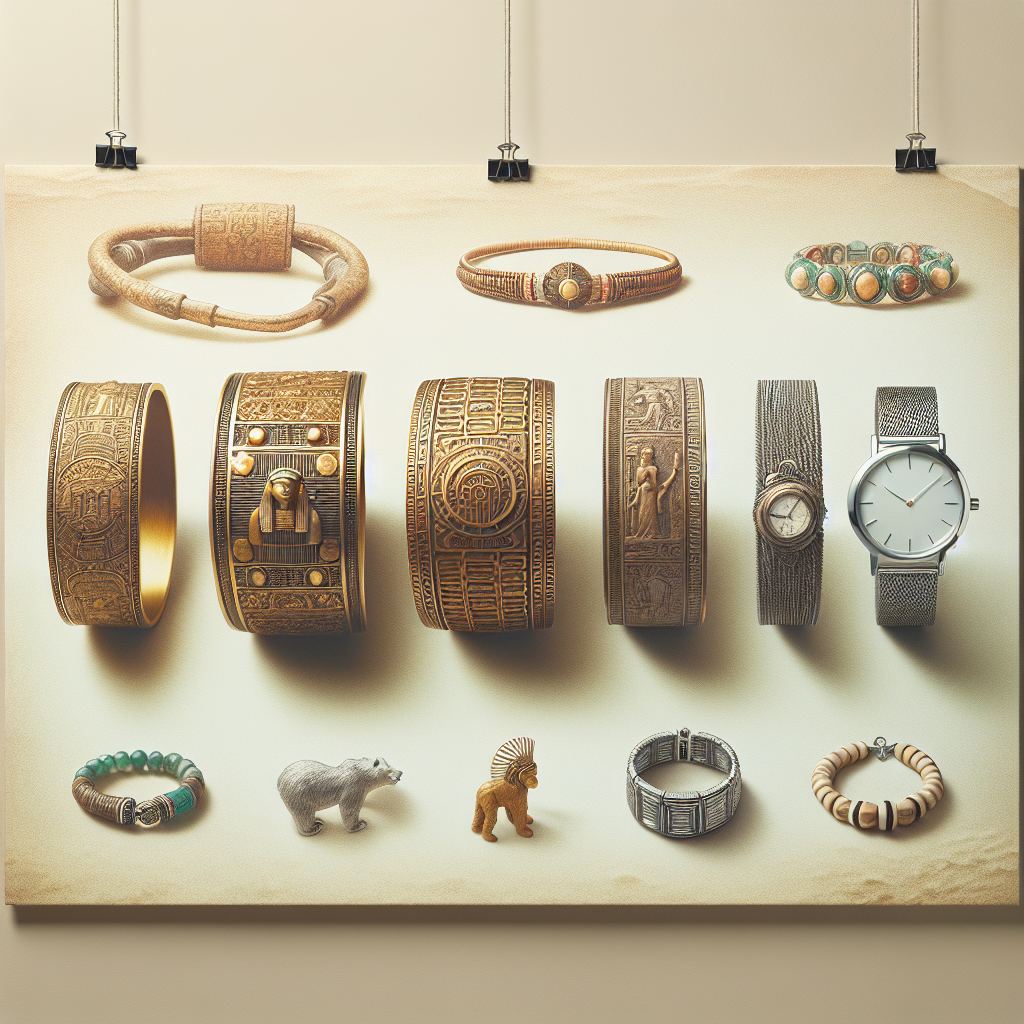
Bracelets have adorned human wrists for millennia, transcending time, geography, and culture. From the ancient civilizations to modern fashion runways, these versatile accessories have a unique ability to encapsulate personal stories and cultural identities. In this exploration of the timeless appeal of bracelets, we’ll uncover their historical significance, stylistic evolution, and the cultural narratives they carry.
Historical Significance
The history of bracelets dates back to ancient times. The earliest evidence of bracelets can be traced to around 5000 B.C. in ancient Mesopotamia, where they were made from materials like bones and stones. These pieces were often ritualistic or symbolic, serving as amulets to ward off evil or signify status within a community.
In ancient Egypt, bracelets were typically crafted from gold and inlaid with precious stones, often found in the tombs of pharaohs. Such adornments symbolized wealth and power, illustrating that bracelets were not mere accessories but significant markers of social standing.
As we journey through history, we find that bracelets have served various purposes, from functional to ornamental. In many cultures, they have been used to commemorate important milestones—births, marriages, and even deaths—creating a rich tapestry of meaning and memory.
A Fusion of Styles
Over the centuries, bracelets have evolved in style and form. The simple leather bands worn by early humans have transformed into a plethora of designs that reflect changing tastes and technologies.
-
Cuffs:
Cuff bracelets, characterized by their rigid structure, have been prominent in different cultures. From the open cuff bracelets of ancient Rome to the bold, modern versions in contemporary fashion, these pieces make powerful statements. -
Charm Bracelets:
Gaining popularity in the mid-20th century, charm bracelets began as a way to carry meaningful tokens. Each charm tells a story, making the bracelet deeply personal. These have gained renewed popularity in recent years, allowing wearers to curate their own experiences. -
Bangles:
Originating in the Indian subcontinent, bangles represent prosperity and femininity. Often made of gold or glass, their rhythmic clinking when worn symbolizes celebration and joy, transcending cultural boundaries and becoming fashionable worldwide. - Beaded Bracelets:
Beaded bracelets, popular across various cultures, have roots in African, Native American, and South American traditions. Each bead can carry spiritual significance or reflect the artistic heritage of its maker, adding layers of meaning to the simple act of adornment.
Cultural Narratives
Bracelets serve as cultural touchstones, often reflecting the values, beliefs, and traditions of the societies from which they originate.
-
Spirituality and Protection:
In many cultures, bracelets are believed to provide protection against negative energies. For instance, the red string bracelet in Jewish tradition is thought to ward off the "evil eye," while in Hinduism, certain sacred threads are worn as a rite of passage. -
Status Symbols:
Across cultures, the materials used in bracelets often signify the wearer’s social standing. In many tribal societies, the adornment of bracelets made from beads or animal hides can identify one’s place within a community. - Expressions of Individuality:
In contemporary society, bracelets have evolved into forms of personal expression. Whether it’s a handmade artisan piece or a designer label, bracelets allow individuals to showcase their identity, beliefs, and personal style.
Contemporary Trends
Today, bracelets continue to captivate fashion enthusiasts and casual wearers alike. The advent of new materials, such as silicone and recycled materials, has made bracelets more accessible. The rise of sustainability in fashion means many are now opting for eco-friendly bracelets that celebrate craftsmanship and ethical practices.
Social media influences also play a significant role in the resurgence of certain styles. Platforms like Instagram and Pinterest have propelled the popularity of stacked bracelets, where wearers mix and match styles for a unique statement.
Conclusion
The journey of bracelets through time and across cultures is a testament to their enduring appeal. Whether worn as symbols of spirituality, expressions of individuality, or markers of status, bracelets connect us to our past while continuing to evolve in the modern world. They remind us that adornment is not merely about aesthetics; it’s about storytelling, tradition, and the complex tapestry of human experience. As long as humans seek to express themselves, bracelets will undoubtedly remain timeless treasures on our wrists.
