
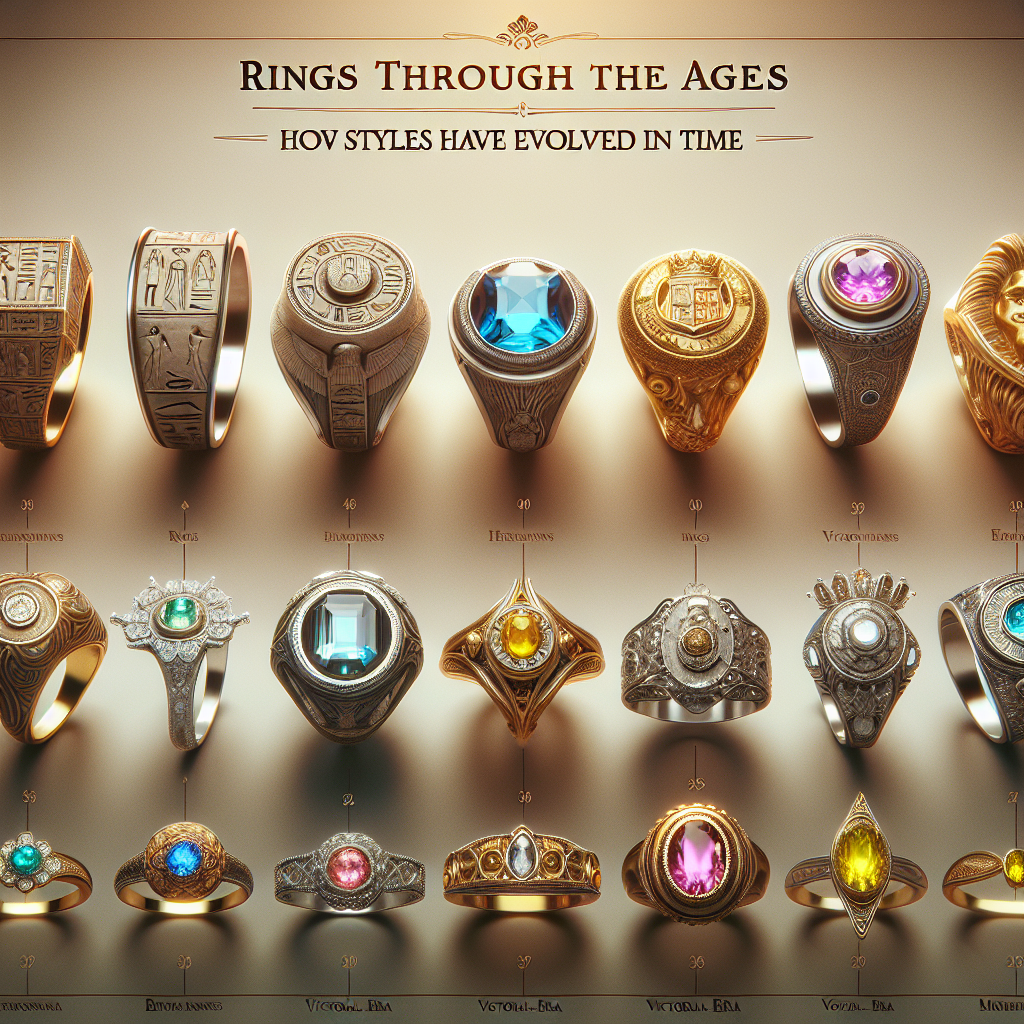
Rings have captivated humanity for centuries, serving as symbols of love, power, and status. Their evolution reflects cultural shifts, technological advancements, and changing aesthetic preferences. This article explores the history and transformation of ring styles through the ages.
Ancient Beginnings
Mesopotamia and Egypt: The Birth of Adornment
The earliest known rings date back to ancient Mesopotamia around 3000 BC. Made from river stones, reeds, or bronze, these rings were often used as seals to mark ownership and authority. Meanwhile, in ancient Egypt, gold rings adorned with semi-precious stones became popular among the elite, symbolizing wealth and divine protection.
Greece and Rome: Signet Rings and Personal Expression
The Greeks and Romans popularized the signet ring, which featured engraved designs that served as personal signatures. These rings facilitated communication and transactions, allowing for the verification of authenticity. The Greeks also embraced intricate designs, often featuring mythological motifs and natural elements, while Roman rings became opulent, showcasing lavish gemstones and elaborate settings.
The Middle Ages: Symbolism and Status
During the Middle Ages, rings transformed into symbols of feudal loyalty and marriage. Claddagh rings from Ireland, which depict two hands holding a heart, became popular as tokens of friendship and love. Knights often wore signet rings to signify their coat of arms, while ornate gold and gemstone rings flourished among the nobility, reflecting both status and spiritual beliefs.
The Renaissance: Revival of Artistry
The Renaissance sparked a revival of art and craftsmanship in Europe, influencing ring design significantly. Jewelers began experimenting with intricate techniques like enameling and filigree. Rings adorned with portraits of loved ones or religious figures became fashionable, showcasing personal sentiment and artistic expression. This period also saw the introduction of the diamond; its rarity made it a sought-after stone among the wealthy.
The Victorian Era: Sentimental and Introspective
The Victorian era brought a wave of romanticism, influencing the styles of rings during the 19th century. Mourning rings, often made of black enamel or featuring hair from deceased loved ones, became popular, reflecting the era’s attitude toward death and remembrance. Additionally, the use of colorful gemstones became a hallmark of this period, as rings featured a blend of stones, including pearls, garnets, and opals, often set in intricate floral designs.
The 20th Century: Modernism and Innovation
The 20th century was marked by dramatic shifts in styles driven by social change. The Art Deco movement introduced geometric patterns and bold color contrasts, with diamonds taking center stage in engagement rings. The mid-20th century saw the rise of simpler, more minimalist designs with classic solitaire rings gaining popularity. Meanwhile, the introduction of platinum as a setting material offered durability and brilliance, changing the standards for engagement rings.
Contemporary Trends: Personalization and Sustainability
Today, ring styles continue to evolve, emphasizing individuality and ethical practices. The rise of customization allows individuals to create unique designs that reflect their personal stories. Alternative gemstones, including lab-grown diamonds and ethical sapphires, are increasingly favored, aligning with growing concerns for sustainability and social responsibility.
Additionally, diverse cultural influences are weaving into contemporary rings. Unique settings, mixed metals, and personalized engravings contribute to a richer tapestry of styles, showcasing a blend of traditional and modern elements.
Conclusion
The journey of rings through history is a fascinating reflection of human culture, creativity, and societal change. From ancient seals to contemporary expressions of individuality, rings have transcended mere ornamentation to symbolize love, commitment, and personal identity. As we look to the future, it’s clear that ring design will continue to evolve, influenced by both tradition and innovation, ensuring their place in our lives for generations to come.
