
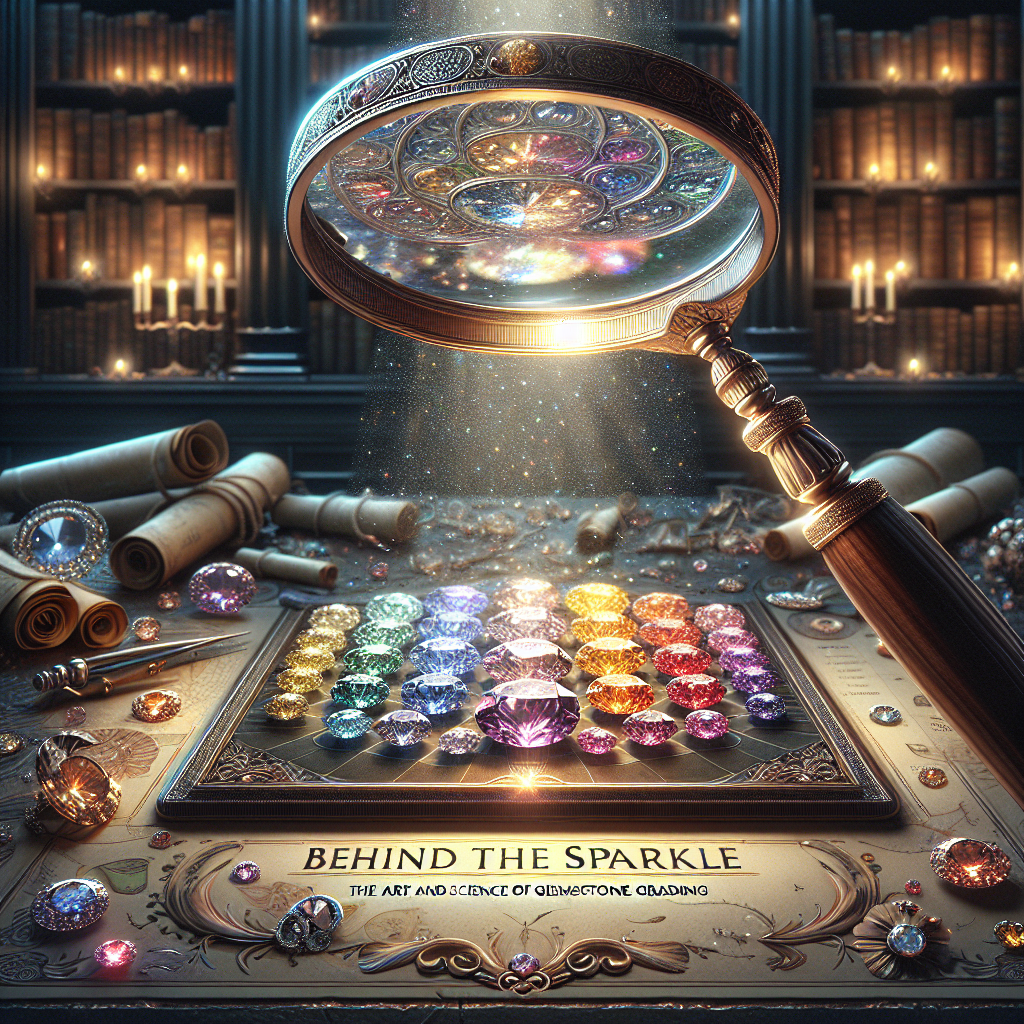
Behind the Sparkle: The Art and Science of Gemstone Grading
Gemstones have captivated humanity for centuries, embodying luxury, beauty, and status. However, behind the radiance of each gem lies a systematic methodology for assessing its value and quality. This process is known as gemstone grading, a blend of art and science that relies on key factors to define a gem’s allure and worth.
The Four Cs: Cut, Color, Clarity, and Carat Weight
The foundation of gemstone grading is encapsulated in the "Four Cs," a term coined by the Gemological Institute of America (GIA). Each aspect plays a critical role in determining the overall quality and desirability of a gemstone.
-
Cut: The cut of a gemstone refers not just to its shape, which can range from round to pear to cushion, but also to how well it has been crafted. A well-cut gemstone reflects light beautifully, enhancing its brilliance. Graders assess factors such as symmetry, proportion, and polish. An expertly cut diamond, for instance, can appear more radiant compared to a poorly cut one, even if they have similar raw materials.
-
Color: Color grading involves evaluating the hue, tone, and saturation of a gemstone. For example, a sapphire can come in various blue shades, but the most desirable ones exhibit a vivid hue. Grading is often done under controlled lighting conditions to ensure that the true color of the gemstone is accurately assessed. The presence of secondary colors can also affect a gem’s grade; a pure blue sapphire, for instance, is generally more valuable than one with noticeable green undertones.
-
Clarity: Clarity grading assesses the internal and external imperfections of gem materials, known as inclusions and blemishes. Tools like loupe magnifiers help gemologists examine these characteristics. The fewer the imperfections, the higher the grade. However, some inclusions can even add character; for example, the unique patterns found in opals or the silk-like inclusions in certain garnets may be appreciated for their aesthetic appeal.
- Carat Weight: This refers to the weight of the gemstone, with one carat equaling 200 milligrams. While larger gemstones often carry a higher value, the relationship isn’t linear. A two-carat diamond may not be twice as valuable as a one-carat diamond due to factors like cut quality and overall rarity.
Advanced Grading Techniques
Beyond the Four Cs, advancements in technology have allowed gemologists to employ sophisticated tools for more precise grading. Instruments such as spectroscopy, refractometers, and the use of lasers enable gemologists to conduct detailed analyses, identifying the gemstone’s composition and potential treatments it may have undergone.
Spectroscopy helps in understanding the gemstone’s color and clarity by analyzing the light spectrum absorbed or transmitted by the gem. This method is crucial for distinguishing between natural stones and synthetics or imitations.
Refractometry measures how light bends as it passes through a gemstone, providing insight into its identity and quality. Certain gemstones possess unique refractive indices that can accurately identify them.
The Role of Certification
Certification by professional gemological laboratories offers assurance and transparency in gemstone grading. Certificates usually include detailed reports on the Four Cs, along with additional characteristics relevant to the specific stone. Reputable institutions like the GIA, American Gem Society (AGS), and International Gemological Institute (IGI) have established rigorous standards that are recognized globally.
When investing in gemstones, particularly for jewelry, understanding the implications of these certifications is paramount. A certified gemstone not only provides a benchmark for quality but also supports its resale value.
The Art of Marketing
While gem grading is rooted in science, the marketing of gemstones takes a more artistic direction. Retailers often emphasize unique backstories, ethical sourcing, and connections to nature, which can increase the emotional appeal and perceived value of a gemstone. A compelling narrative around a stone can be as important to its allure as its physical characteristics.
Conclusion
Gemstone grading is a fascinating interplay of art and science that requires deep knowledge, specialized skills, and an appreciation for beauty. Whether you’re a collector, a jeweler, or simply an admirer of these dazzling creations, understanding the intricacies of how gems are graded can deepen one’s appreciation for them. It unveils the story behind each sparkle, transforming a simple stone into a cherished treasure.