
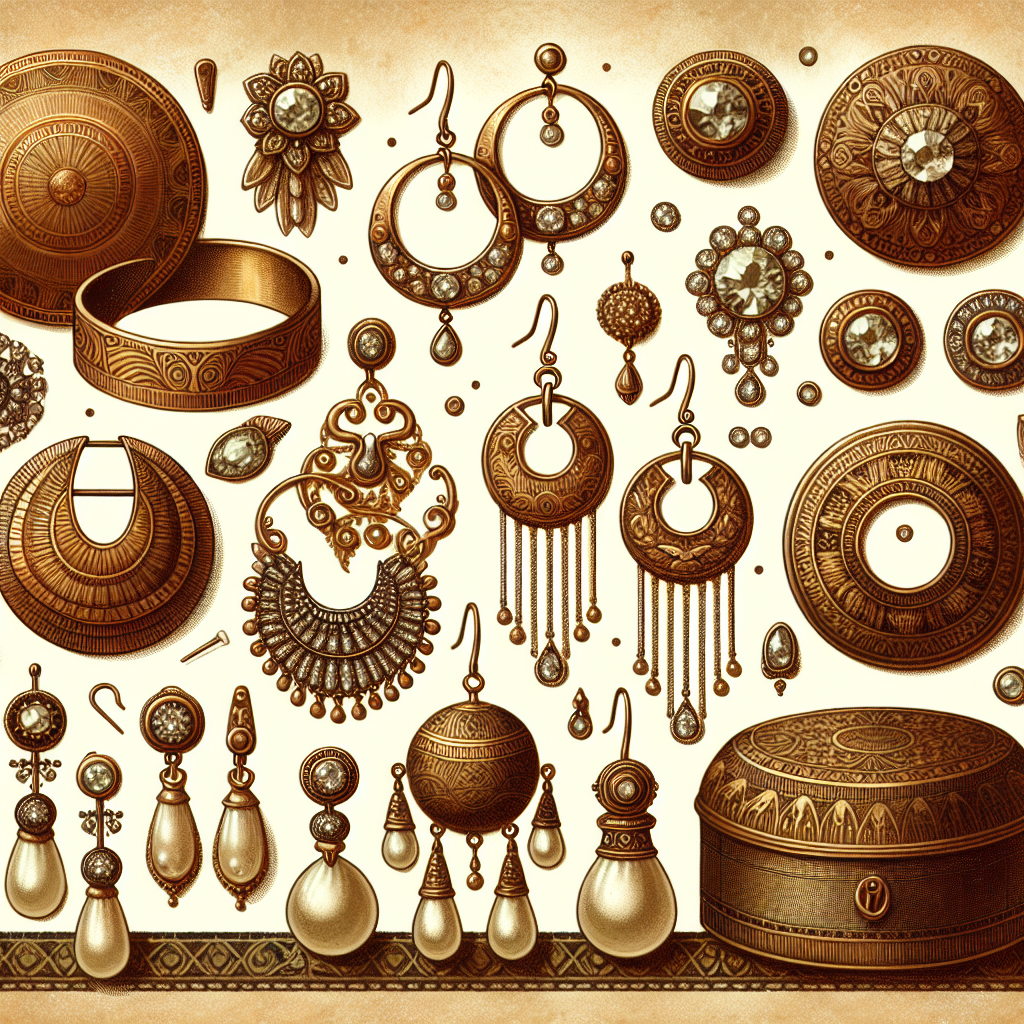
Earrings are much more than just decorative accessories; they are a profound expression of identity, culture, and history. Tracing their lineage reveals a fascinating story that intertwines artistry with social significance, spanning thousands of years and numerous civilizations.
Ancient Origins
Prehistoric Beginnings
The earliest evidence of earrings dates back to around 2500 BCE, where archaeological findings suggest that they were worn in regions of the Middle East, specifically in areas like Mesopotamia and the Indus Valley. Ancient burial sites often contain jewelry items made from materials such as gold, silver, and precious stones, highlighting their importance in burial rites and social status.
Egypt and Mesopotamia
In ancient Egypt, earrings were seen as symbols of wealth and power. Often crafted from gold and adorned with gemstones, they were favored by the elite, including pharaohs and nobility. The intricate designs depicted various motifs, including animals and hieroglyphs, serving as amulets for protection and significance.
Similarly, in Mesopotamia, earrings played a crucial role in personal adornment. Bronze and gold were commonly used, and designs varied from simple studs to elaborate hoop earrings, reflecting the wearer’s social standing.
Cultural Significance Across Civilizations
The Greco-Roman Era
Earrings continued to evolve in ancient Greece and Rome. Greek women wore earrings that were characterized by their elaborate designs, often depicting mythological figures. Roman women also embraced earrings, with wealthier citizens showcasing larger, more ornate pieces that highlighted their affluence.
Interestingly, while earrings were fashionable among women, men also wore them in certain cultures, particularly among sailors and the warrior class. Earrings were believed to signify bravery and were sometimes used as a mark of a sailor’s journey.
The Middle Ages
The fall of the Roman Empire saw a decline in the popularity of earrings in Western Europe. However, they remained common in the Eastern Byzantine Empire, where they were often intricately designed and made from precious metals. The Middle Ages saw a resurgence of jewelry, and earrings began to reappear, albeit often more modest in design compared to ancient times.
The Renaissance to the 19th Century
A Revival of Elegance
By the Renaissance, earrings returned with a flourish. This era celebrated artistry, and jewelers crafted exquisite pieces adorned with diamonds, pearls, and colorful gemstones. Both men and women began to embrace earrings as a fashion statement, and styles ranged from elaborate chandeliers to simple hoops.
The 18th century saw further innovation, with the introduction of new techniques and materials that allowed for more delicate and intricate designs. The revolution in design continued into the 19th century, with the advent of new forms like the drop earring, which further enhanced women’s elegance.
The Modern Era
20th Century Transformations
The 20th century marked a significant turning point in the history of earrings. The flapper era of the 1920s brought about unprecedented freedom in fashion, and earrings became a staple for women seeking to express their individuality. Birthstones, art deco influences, and avant-garde designs flourished.
The 1960s and 70s introduced more unconventional styles, including tribal and bohemian influences. Piercings beyond the traditional earlobe became popular, reflecting the era’s rebellious spirit. As social norms evolved, people began to use earrings not just as adornments, but as symbols of personal identity.
Contemporary Styles and Cultural Appropriation
Today, earrings come in an astounding variety of shapes, sizes, and designs, reflecting diverse cultural influences. From minimalistic studs to statement pieces inspired by global traditions, earrings continue to serve as a canvas for self-expression.
However, the conversation surrounding cultural appropriation has become increasingly relevant, especially when it comes to traditional earring styles from indigenous and marginalized cultures. As the fashion world embraces global influences, it is crucial to approach these styles with respect and understanding of their cultural significance.
Conclusion
The history of earrings is a testament to their enduring appeal and cultural significance. From ancient civilizations to modern fashion, earrings have transcended mere decoration to become a powerful medium of self-expression. As we adorn ourselves with these exquisite pieces, we also connect with the rich tapestry of human history, celebrating the artistry and cultural narratives that earrings embody.